
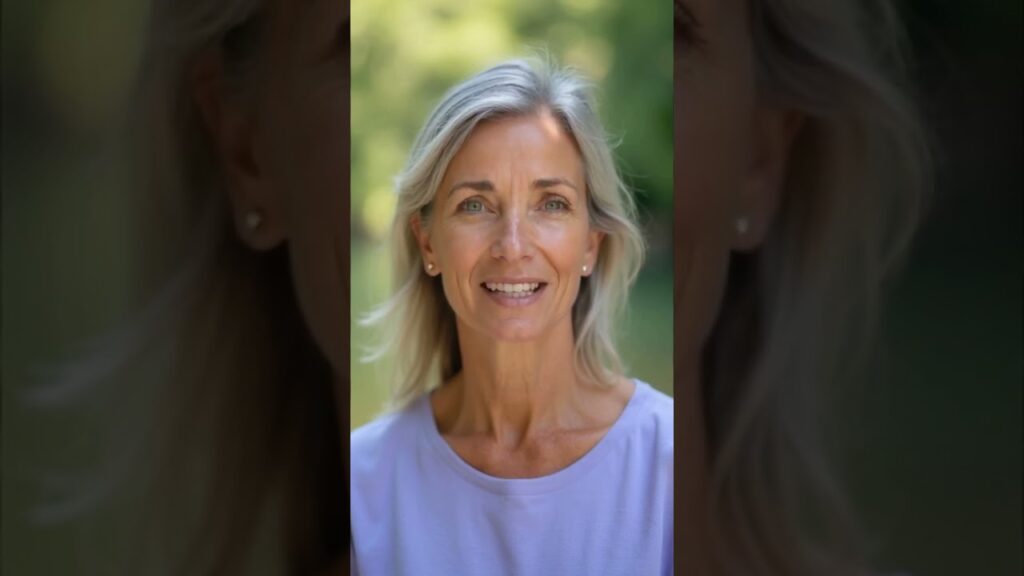
Chapter 4 – The Conversation with My Mother
Monday carried that faint taste of beginning —
a feeling that used to scare me.
Now it just felt like a door opening quietly.
I boiled water, set my notebook on the table,
and left it closed.
I didn’t want to start with words today.
I wanted to start with listening.
The doorbell rang.
It was my mother — a little earlier than usual,
holding a fabric tote bag.
She stood at the threshold the way one stands before a small shrine:
with reverence and a touch of hesitation.
“May I come in?” she asked,
as if she needed permission.
“Come,” I said. “I’ve been waiting.”
She placed the bag on the counter and kissed me lightly on the cheek.
“I brought a few things,” she said.
“Don’t fuss. I’ll just leave them and go.”
“I’m not in a hurry today,” I replied.
She looked at me, searching my face for truth.
Then she began to unpack:
lemons, two apples, a bunch of parsley tied with red string,
a jar of homemade tomato sauce —
and finally, a small, aged envelope.
She held it a moment longer before letting go.
“This was your grandmother’s,” she said. “We’ll look at it later, if you want.”
I poured us both tea.
She sat in the chair by the window — the one she used to avoid,
as though the light might expose her.
Now she let it touch her freely.
“It’s peaceful here,” she said.
“It is,” I answered.
I let the silence stay.
Once, silence between us meant distance.
Now it meant space.
“I want to tell you something,” I said.
She straightened a little.
“Tell me.”
“I had coffee at the harbour yesterday.
With Michalis.”
Her eyes softened.
“I’m glad,” she said after a pause.
“I’m glad you went out.
And if he’s part of the reason, that’s even better.”
I smiled and stirred her tea — half a spoon of sugar, never full.
Rituals have their own language.
After a moment, she spoke again, almost to herself.
“You know, Magda… when you were little,
I was afraid of beginnings — Mondays, school years, new jobs.
I was terrified of ruining things on the first day.
So I kept everything tight, controlled, neat.
And without meaning to,
I made you tight too.
I’m sorry.”
The word sorry floated in the air, thin but honest.
I looked at her.
I saw the woman who held our home together with bare hands —
bills, recipes, fears.
I also saw the young girl inside her
who once tried so hard to do everything right
that she forgot to be free.
“You don’t have to carry my storms,” I said softly.
“The things that hurt me — I’ve untied them now.
And even if they once caused pain,
today they remind me that you tried.
And that’s love.”
Her mouth trembled slightly before she smiled.
“Yes,” she whispered. “Love.
But love needs room to breathe.
I learned that late.
You taught me.”
“We learned together,” I said.
She got up and went to the sink.
Washed the parsley.
Chopped a few leaves.
Left them on a plate.
“If you want,” she said,
“I’ll show you a quick sauce for pasta.
It smells like Sunday.”
Some things aren’t said.
They’re cooked.
The kitchen filled with the scent of tomato, garlic, and warmth.
Every so often she dipped the spoon,
“Like this?” she asked.
I nodded.
She didn’t need my answer.
She only wanted to know we were doing it together.
We ate early.
The clinking of forks, the small hum of running water,
and the single “have a bit more” — not ten.
When we finished, she wiped the table with a small cloth,
then reached for the envelope again.
“Now?” she asked.
“Now,” I said.
The envelope was yellowed at the edges.
Inside were three things:
a handwritten recipe in pencil,
a folded letter,
and a tiny rosary — thin as memory.
She opened the recipe first.
“Your grandmother wrote like this,” she said.
‘A little,’ ‘as much as it takes,’ never grams.
She cooked with the instinct of her heart, not the measure of her hand.”
I smiled.
“That’s how you learn to trust,” I said.
She nodded.
“That’s how.”
The letter was from my grandmother to my mother, written years ago.
I didn’t read it all.
Only one sentence stood up from the page like a candle:
‘Care isn’t about predicting everything.
It’s about being there when you can’t.’
My mother turned the small rosary in her fingers.
“I held this when I waited at the hospital,” she said quietly.
“Back then, when…”
She didn’t finish.
She didn’t need to.
We both knew the then.
“When you were there,
and I couldn’t help,
I felt everything collapse inside me,” she continued.
“I cried in the bathroom so you wouldn’t see.
And then I learned to sit beside you — quietly.
To hold your hand without fixing anything.
That’s what I can do.
Sit.
If you ever want, I’ll always sit.”
Her voice trembled on always,
not from weakness,
but from truth.
I took her hand.
“That saved me,” I said.
“Not the fixing. The being.”
We sat there,
two women in a small kitchen,
bathed in afternoon light and tomato scent.
Simplicity has its own kind of music
when you stop resisting it.
“I have one request,” I said.
“Anything.”
“When you come,
don’t bring things every time — only when you want to.
And come not to take care of me,
but to be with me.
And if one day I can’t talk,
don’t take my silence personally.”
She nodded.
“Deal.
And I have a request too —
when you need help, ask me.
Not because you can’t do it alone,
but because you don’t have to.”
It was our cleanest agreement in years.
Boundaries that didn’t hurt.
Chairs set at the right distance around the same table.
As I watered the flowers, she noticed a tear in my sleeve.
“Bring it here,” she said.
“I’ll sew it.”
“I’ll take it to the tailor,” I replied.
“Bring it,” she repeated gently.
I found myself sitting beside her, arm out,
while she pulled a small sewing kit from her bag.
Who still carries a needle these days?
She does.
Her persistence was a prayer.
“Do you know why I love sewing?” she asked.
“Because you fix things?”
“Not exactly.
Because it requires quiet.
You can’t rush sewing.
If you do, you bleed.”
I watched the needle glide in and out.
I thought about how often I had rushed to fix my life,
closing the seams before the fabric had settled.
“There,” she said finally, blowing softly on the spot.
“It’s invisible now.”
I touched it.
Smooth. Whole.
“Thank you,” I whispered.
“Thank the quiet,” she said with a grin.
We both laughed —
a light, honest sound that filled the room.
Time passed until the light changed.
She packed her bag but left the envelope on the shelf.
“You keep it,” she said.
“When things get heavy,
remember what my mother wrote:
Care doesn’t predict. It stays.”
She kissed my cheek.
“Shall I call tonight?”
“Call — and if I don’t answer, try tomorrow.
Don’t worry.”
“I won’t,” she said. “I’m learning too.”
When she left, the house didn’t fall silent.
It just breathed differently —
a long, soft exhale.
I washed the dishes, wiped the counter.
Then I opened the envelope again, unfolding the letter carefully.
One more line caught my eye:
‘A child learns love through a gaze.
If you can’t speak, look.
If you can’t act, stay.’
The day turned blue — that gentle hour when shadows shrink and walls glow.
I texted Michalis:
“Today I learned that care means presence. I’ll keep it.”
I didn’t wait for a reply.
The room already felt full.
I opened my notebook and wrote:
- The sauce that smelled like Sunday.
• The small, precise stitches.
• The letter that said: stay.
I looked at the words,
and a sweet heaviness gathered behind my eyes — not tears,
gratitude.
My mother’s love hadn’t changed.
It had simply become truer.
Like a dress not made new,
just worn differently.
When darkness fell, I lit one of her candles.
The flame flickered gently over the letter,
as if reading it aloud.
Outside, the city was quiet.
A neighbour spoke softly on the phone.
Somewhere, the scent of jasmine drifted again.
The phone buzzed — a message from my mother:
“Say goodnight to the jasmine for me.”
I smiled.
I touched the petals.
“Goodnight, Mum,” I wrote back.
“Tomorrow I’ll bring new soil.”
“Not too much,” she replied. “Just enough.”
I laughed out loud this time —
a full, free laugh that bounced off the walls and stayed there,
like a new memory being born.
Before bed, I touched the mended sleeve.
No pain.
The fabric had joined.
I turned off the light and whispered,
half prayer, half realization:
“Today, my love learned to sit.”
And that was enough.