
Chapter 3 – The Sunday Coffee
Sunday arrived quietly,
the way days do when they don’t expect anything from you.
There was no list of tasks,
no plans to prove my worth —
only that soft, tender curiosity that visits the heart when it senses something true might happen.
The kitchen smelled of bread.
Maria had left a small basket of biscuits outside my door,
along with a note:
“For Sunday — to remind you that this day is for rest, not for thinking.”
I smiled.
I could almost see her in her apron,
one hand on her hip, humming an old tune as she baked.
Life has this quiet way of finding you again
through the gestures of people who expect nothing in return.
Sunlight slipped through the half-open shutters.
I washed last night’s dishes and let them dry by the sink.
On the window ledge, the jasmine had grown tall enough to touch the glass.
I reached out —
its petals felt like the promise of something that had survived the storm.
Then came the familiar sound of a message.
“Coffee at the harbour, 10 a.m.? Same place.”
Simple.
No decoration.
No urgency.
Just an open door.
I made my coffee and sat in front of the mirror.
I didn’t want to get ready.
I wanted to be.
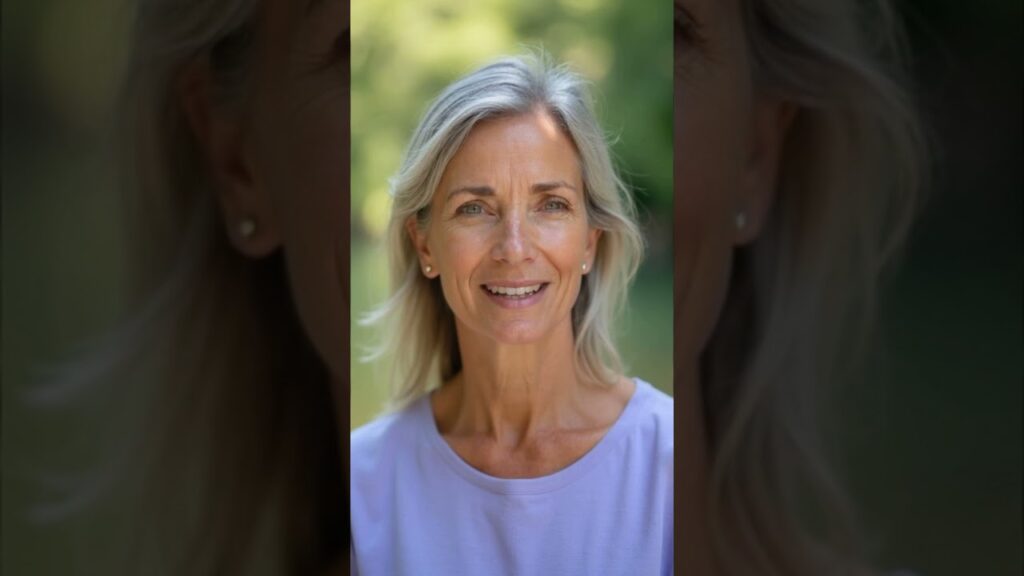
My hair fell naturally over my shoulders.
My eyes still carried a trace of old nights,
but now a new light lived behind them.
I put on a white shirt and simple trousers.
For once, I didn’t hide the lines,
the scars,
the silences that had shaped me.
They were all part of the same woman —
the one who had survived the rain.
The air outside tasted of salt and sun.
Shops were slowly opening,
gulls danced above the water,
and the whole city seemed to exhale.
He was already there —
on the same low wall by the sea,
this time holding two glass cups instead of paper ones.
When he saw me, he smiled.
Not a smile that wanted anything —
just one that said I see you.
“Good morning,” I said.
“Good morning, Magda.”
His voice carried that quiet warmth that steadies you before you even realize it.
We sat side by side.
The sea was almost still.
The water mirrored the sky,
and I thought: Maybe this is what peace looks like — when what’s inside you and what’s outside you tell the same story.
He looked out at the horizon.
“I often think of that night I called you,” he said.
“So do I,” I answered.
“If you hadn’t, I might never have learned that I could still answer.”
He turned to me.
“I didn’t call out of worry.
It was more like… intuition.
Something inside me said, Now. Call her now.”
I nodded.
There are bonds you can’t explain —
threads that cross time quietly,
pulling two souls toward the same moment.
We spent the morning talking about small things:
how hard it is to find good bread these days,
the pigeons nesting in the old warehouse,
how saying come for coffee can really mean I want you near.
At one point, I laughed.
Not the polite laugh of people proving they’re fine —
the real kind,
the one that rises from the chest after a long dive.
He smiled.
“That sound suits you,” he said softly.
After a pause, he looked at the water again.
“You know why I like sitting here?”
“Because it’s quiet?”
“Not only. Because I watch the sea do what we do.
It hits the rocks, retreats, comes back again —
each time carrying something new.
It never tires of trying.”
I listened and thought:
Love isn’t about stability.
It’s about continuity.
I stayed silent,
but it was a silence that spoke.
And he understood.
He didn’t ask about my past.
He didn’t need to.
“Some stories,” he said, “are better learned slowly — through what’s not said.”
That, more than anything, released me.
For years, I’d tried to explain myself to people who only heard my words,
not the pauses between them.
Michalis didn’t ask for explanations.
He asked for presence.
I looked at his hands —
steady, grounded, patient.
The kind of patience that doesn’t ache anymore.
“Sometimes,” I whispered,
“I’m afraid to get used to peace.
Every time I feel calm,
a voice in me says: the storm is coming again.”
He lowered his gaze for a moment,
as if weighing his words.
“The storm isn’t punishment, Magda.
It’s how the sky clears itself.
Don’t be afraid of it.
Just keep an umbrella — not to stay dry,
but to remind yourself that you’re still there.”
His words settled inside me like warm rain.
Maybe healing isn’t about safety —
maybe it’s about staying through the weather.
The hours passed softly.
When we stood, the sun had climbed high,
touching everything with generosity.
We walked to the end of the harbour.
The wind played with my hair,
and for the first time in years, I felt beautiful —
not because someone was looking at me,
but because I was seeing myself clearly.
“Should I walk you home?” he asked.
“No,” I smiled. “I want to walk alone today.”
He nodded.
“Good. But I’ll call this afternoon —
just to check if you remembered your umbrella.”
We both laughed —
the kind of laughter that doesn’t begin or end,
only flows.
On my way back,
everything looked brighter.
Not because the day had changed —
but because I had.
At home, I opened all the shutters.
Light flooded in.
On the table, my notebook waited.
I wrote:
“Today —
• I drank coffee with the sun.
• I didn’t fear laughter.
• I didn’t avoid silence.
• I explained nothing.
And still, everything was understood.”
I closed the notebook and looked around.
The lamp, the mirror, the dishes by the sink —
everything quietly in place,
as if the house knew that Sunday had done its job:
to remind me that life doesn’t need fixing —
it only needs living.
A breeze slipped through the window.
The jasmine swayed gently,
as if whispering, You’re on your way.
And for the first time,
I truly believed it.