
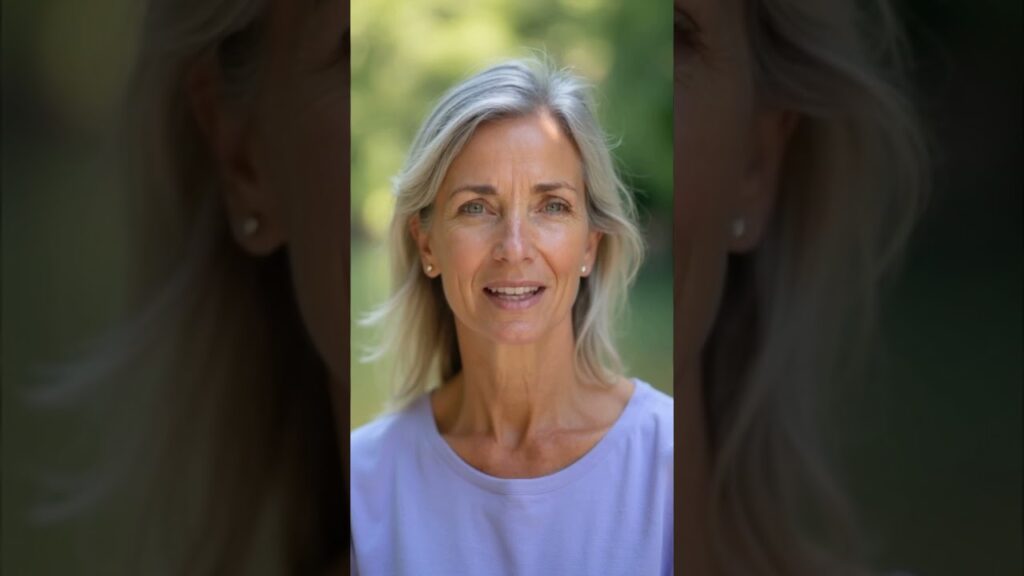
Chapter 3 – Letters Never Sent
It began with the sound of rain against the window again —
not the storming kind that asks for attention,
but the quiet kind that repeats itself like a lullaby you half remember.
Magda watched the drops gather and slide down the glass.
Each left a faint path, a trace that disappeared as soon as it formed.
The morning felt like that: full of things that once mattered and now dissolved softly into what was.
She opened the drawer where she kept her papers.
Old envelopes, postcards, folded sheets that had traveled with her through different years,
all still carrying the weight of words that had never been sent.
The handwriting had changed over time —
some lines confident, others hesitant, as if written by different versions of herself.
She spread them across the table.
The ink was faded, the paper slightly yellowed at the edges.
The silence of the room deepened,
as though it understood that she was about to touch something fragile.
The first letter was to Michalis.
Dated years ago, never sealed.
She read:
“I keep thinking that the sound of your hands shaping wood is the same sound my heart makes when it’s trying to stay together.
I don’t know how to thank you without making it sound like goodbye.”
She smiled.
It was the kind of letter that only youth could write — full of confusion disguised as courage.
Back then, she had believed that silence between two people was a sign of distance.
Now she knew better.
Sometimes silence was the deepest form of closeness.
It held everything words would have only broken.
She folded the letter gently,
smoothed the crease with her thumb,
and placed it aside.
The next one was to Alexis.
A thinner paper, hurried handwriting, sentences that ran over one another.
She remembered writing it in a café on a gray afternoon when leaving had felt like the only way to breathe.
“You once told me that love needs motion, that it can’t live in still air.
Maybe you were right. But some winds only tear things apart.”
The words no longer hurt.
They felt like pebbles smoothed by time —
familiar, harmless, rounded at the edges.
She wondered what had become of him.
Then she caught herself.
It didn’t matter.
The story had already found its ending in her peace.
At the bottom of the pile, there was one more letter —
not addressed to anyone.
No date, no name.
Just a few lines in her smallest handwriting:
“For the day I finally understand that every goodbye is also a return.
For the person I will become when I stop searching for what was never lost.”
Magda read it twice.
The air in the room changed; even the candle flickered differently.
It was strange to meet yourself like that —
to be both writer and reader,
to see the distance between who you were and who you’ve become.
Not an ache, not nostalgia.
Just a soft acknowledgment,
the kind that feels like closing a door gently behind you.
She took a deep breath and gathered the letters into a bundle.
For a moment, she thought of burning them —
watching the smoke carry the words into sky,
letting the past dissolve in fire.
But no.
They were not burdens anymore.
They were bridges she had already crossed.
Instead, she tied them with a thin piece of string and placed them in a wooden box.
Not to forget them,
but to honor them.
Every unsent word had been a step toward the silence she now understood.
Every unspoken thought had taught her how to listen.
She went outside.
The rain had stopped.
The ground shimmered with the kind of clarity that only follows cleansing.
From the garden rose the scent of wet mint.
Magda closed her eyes and let the world breathe around her.
Somewhere far off, thunder muttered its last syllables,
and then the hill fell quiet again.
She whispered into that quiet, not as prayer,
but as conversation with the invisible:
“Thank you for what never happened.
It brought me here.”
She stood there a while,
the damp air against her skin,
the pulse steady in her wrist,
the small wooden box warm in her hands.
The past did not weigh anymore.
It shimmered — light as rain,
brief, necessary,
already absorbed by the earth.